Cottagecore on a Budget: Creating a Cosy Home Without Spending a Fortune
Hello Toadstoolers!
There is something wonderfully comforting about a cottagecore home.
It’s the softness of a well-loved blanket, the warmth of natural wood, a vase of flowers picked from the garden, a stack of favourite books and the feeling that everything around you has a story to tell.
But despite what we might see on Pinterest and Instagram, creating a cottagecore home doesn’t have to mean spending a small fortune.
In fact, I think the opposite is true.

At its heart, cottagecore is about simplicity, making do, appreciating what we have and finding beauty in the everyday. Second-hand furniture, handmade pieces, vintage crockery and things that have been lovingly passed from one home to another can often create far more character than a room filled with brand-new, matching accessories.
And perhaps that is what makes cottagecore so appealing.
It doesn’t need to be perfect.
It just needs to feel like home.

Start With What You Already Have
Before reaching for your purse, take a good look around your home.
You may already have the beginnings of your cottagecore home without realising it.
An old wooden chair tucked away in a corner. A pretty jug sitting in the back of a cupboard. A collection of books. A knitted blanket. An old picture frame. A basket that has seen better days.
Rather than replacing everything, think about how you can rearrange, reuse and repurpose what you already own.
Move furniture around.
Create a little reading corner.
Display your favourite crockery rather than hiding it away.
Bring a wooden chair into the bedroom and use it as a bedside table.
Sometimes the most effective changes cost absolutely nothing.

Embrace Second-Hand Treasures
If there is one thing cottagecore and second-hand shopping were made for, it is furniture.
Charity shops, car boot sales, antique centres, flea markets and online marketplaces can all be wonderful places to find pieces with a little history.
And don't worry if something isn't perfect.
A few knocks and scratches on an old wooden table aren't necessarily flaws. They can be part of its charm. A piece of furniture that has been used and loved can bring a warmth to a room that something brand new simply can't replicate.
Look out for:
Wooden stools and chairs
Old farmhouse tables
Dressers and cupboards
Wicker and wicker-style baskets
Vintage mirrors
Ceramic jugs and bowls
Old picture frames
Floral fabrics
Quilts and blankets
Traditional crockery
The beauty of buying second-hand is that you're not simply buying something to fill a space.
You're finding something with a little story behind it.

Give Old Furniture a New Lease of Life
One of my favourite things about cottagecore interiors is that they don't demand perfection.
That means an old piece of furniture doesn't necessarily need to be thrown away simply because it looks tired.
A good clean, a little sanding, some new handles or a fresh finish can completely transform an old piece.
Even something as simple as changing the drawer pulls on an old chest of drawers can give it an entirely different personality.
And there is something incredibly satisfying about looking at a piece you've rescued and thinking:
“I saved that.”
Rather than buying something new every time your home needs a refresh, consider whether the things you already own could be given another chapter.
Let Nature Do the Decorating
One of the easiest ways to bring cottagecore into your home is also one of the cheapest.
Bring a little bit of the outside in.
A handful of garden flowers in an old jam jar.
A few branches gathered on a country walk.
Fresh herbs on a kitchen windowsill.
A small houseplant in a vintage pot.
Pressed flowers tucked into an old frame.
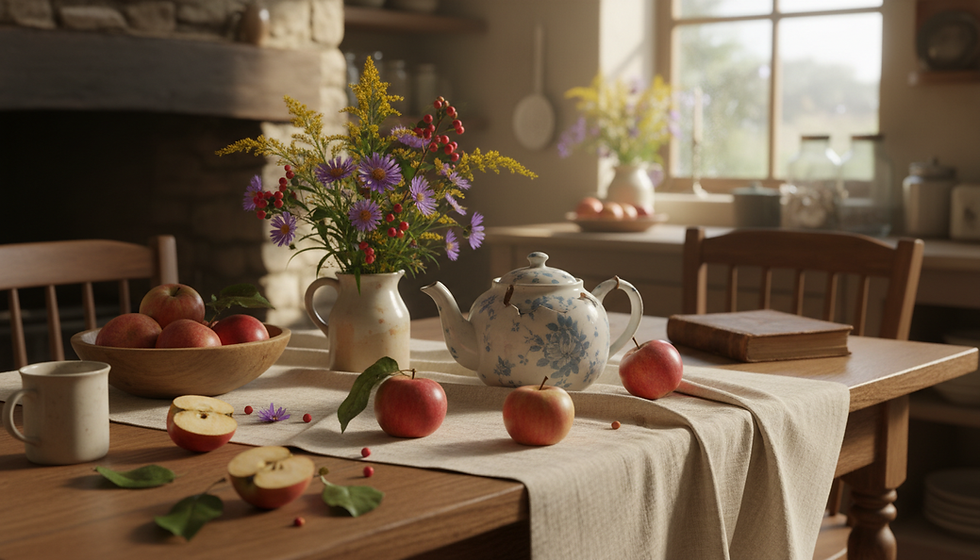
You don't need elaborate floral arrangements or expensive faux flowers. Sometimes a simple posy picked from the garden is much more beautiful.
Cottagecore is inspired by the countryside, so allowing your home to change with the seasons is a lovely way to embrace the style.
Spring blossom.
Summer wildflowers.
Autumn leaves.
Winter greenery.
Nature gives us a constantly changing colour palette — and it's wonderfully free.

Make Your Home Cosy With Textiles
You don't need to redecorate an entire room to make it feel warmer.
Sometimes all it takes is a little texture.
Layer blankets over sofas and chairs. Add cushions in natural fabrics. Introduce a pretty tablecloth or a floral curtain. Fold quilts at the end of the bed.
Don't be afraid to mix patterns either.
Florals, gingham, checks and simple stripes can work beautifully together when they're kept within a soft, natural colour palette. Cottagecore interiors often embrace floral and botanical patterns alongside natural materials such as wood, cotton and linen.
And remember — things don't have to match.
In fact, a little bit of mismatching can make a room feel much more collected and personal.
Create Atmosphere With Lighting
Lighting can completely change how a room feels.
During the day, make the most of natural light. Open the curtains and let the sunshine in.
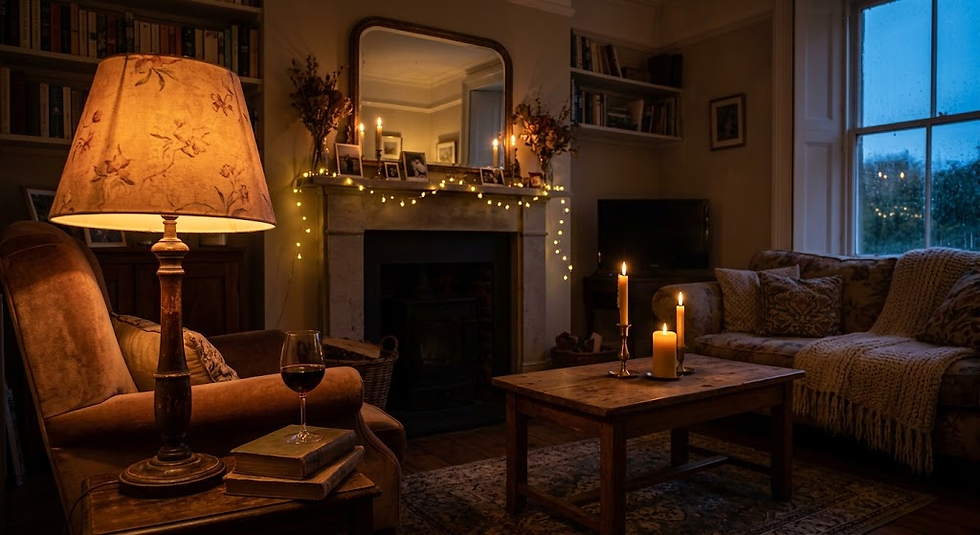
As evening arrives, switch off the harsh overhead lights and create little pools of warm light around the room.
A second-hand table lamp, a candle or two and a string of warm fairy lights can create a wonderfully cosy atmosphere without requiring a complete room makeover.
Cottagecore isn't just about what your home looks like.
It's about how it feels.
Don't Forget the Kitchen
The kitchen is perhaps one of my favourite places to embrace cottagecore.
And you don't need an enormous farmhouse kitchen to do it.
Display your favourite mugs.
Keep wooden chopping boards on show.
Use an old ceramic jug for utensils.
Put fruit into a woven basket.
Grow herbs on the windowsill.
Leave a cake cooling on the kitchen table.
Hang your prettiest tea towels where you can see them.
There is something lovely about a kitchen where everyday objects are allowed to be part of the decoration.
After all, cottagecore is about celebrating ordinary life.

Choose Quality Over Quantity
This is perhaps my favourite rule when decorating a cottagecore home.
You don't need more. You need the right things.
Instead of buying ten inexpensive accessories simply because they're “cottagecore”, save for one piece that you really love.
Perhaps it's a beautiful handmade wooden table.
A vintage dresser.
A handcrafted chair.
A quilt you'll keep for years.
Or a piece of furniture made by an artisan who has taken the time to create something properly.
Handmade furniture can bring a wonderful sense of warmth and individuality into a home because it isn't designed to look exactly like everything else.
And when you choose something you genuinely love, you're much more likely to keep it for years to come.
Make It Personal
The loveliest cottagecore homes aren't the ones that look like they've been lifted straight from a catalogue.
They're the ones that tell you something about the people who live there.
Display photographs.
Keep your favourite books within reach.
Show off collections you've gathered over the years.
Hang artwork that means something to you.
Use your grandmother's crockery.
Put flowers in a jug you've had for years.
Let your home evolve naturally.
Cottagecore isn't about recreating somebody else's idea of a perfect cottage.
It's about creating your own version of a slower, simpler and more comfortable way of living.
A Cottagecore Home Doesn't Need to Be Expensive
Perhaps the biggest misconception about cottagecore is that you need to buy lots of beautiful things to achieve it.
You don't.
You can start with what you already own.
You can search charity shops for treasures.
You can rescue an old piece of furniture.
You can grow herbs on a windowsill.
You can pick flowers from the garden.
You can make something yourself.
You can simply slow down and appreciate the things that are already around you.
Because really, that's what I love most about cottagecore.
It's not about having the biggest house, the fanciest furniture or the most expensive decorations.
It's about the atmosphere.
The worn wooden table.
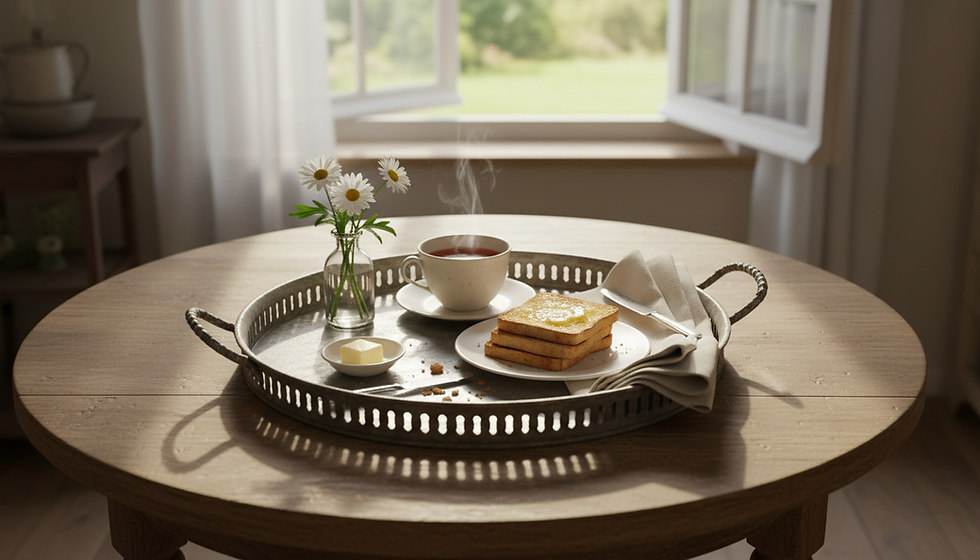
The mug of tea.
The blanket thrown over the chair.
The flowers in an old jar.
The smell of something delicious cooking in the kitchen.
A good book waiting beside the fire.
And a home that feels lived in, loved and entirely your own.
And perhaps that's the most beautiful thing of all.
You don't need to spend a fortune to create a cottagecore home.
Sometimes, you simply need to look at what you already have and see the beauty in it. 🌿
Until next time, Toadstoolers.


Comments